-
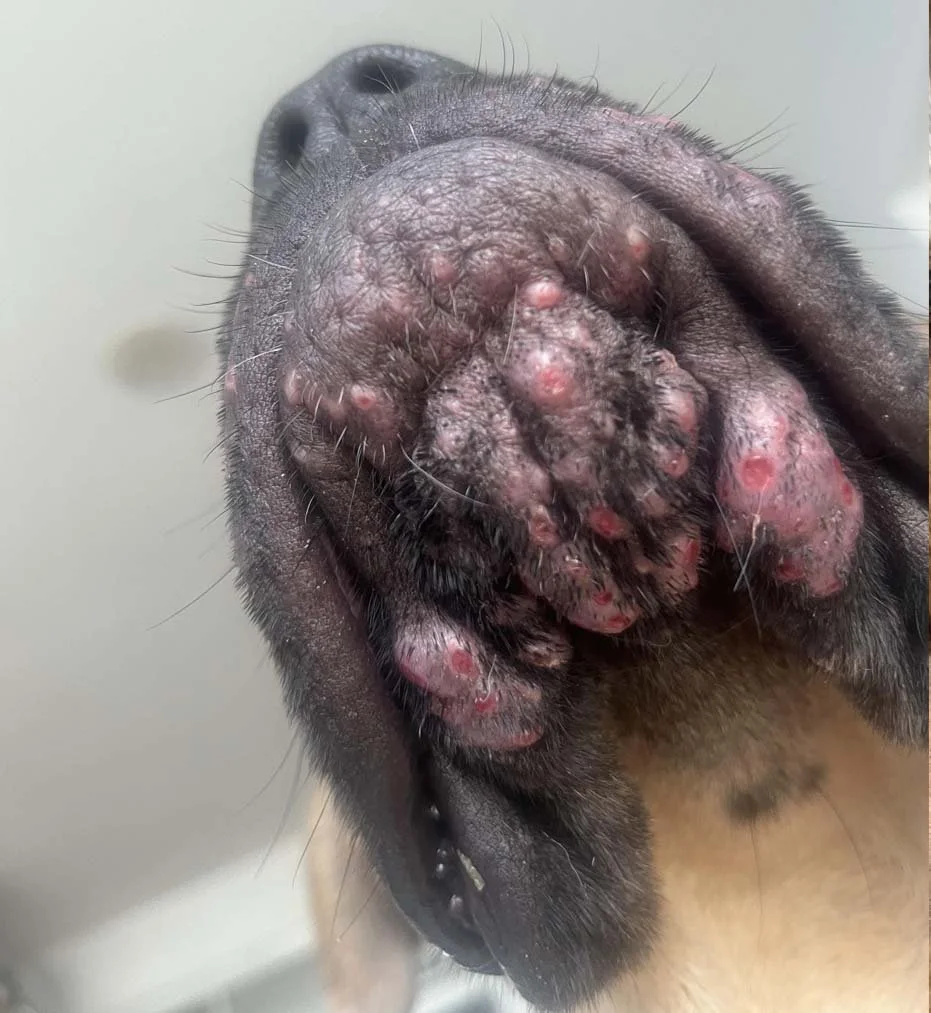
Symptoms
Persistent itching, licking, chewing, or scratching
Red, inflamed skin (feet, armpits, groin, belly, face)
Chronic paw licking or saliva staining
Recurrent ear infections (often bilateral)
Hair loss and skin thickening over time
Hot spots and secondary bacterial or yeast infections
Anal gland issues (commonly overlooked but allergy-related)
Symptoms often wax and wane, leading owners to underestimate severity.
-
Treatment
There is no cure for allergies — management is lifelong and multi-layered.
Management options
Identify the allergy type
Environmental (atopy)
Food (via strict elimination diet)
Contact (bedding, cleaning products, grasses)
Medical control
Antihistamines (limited effect in many Corsos)
Apoquel or Cytopoint for itch control
Short-term steroids (flare control only)
Skin barrier support
Medicated shampoos
Regular bathing and moisturising
Secondary infection control
Antibiotics or antifungals when required
⚠️ Treating infections without controlling the allergy leads to constant relapse.
-
Prevention
Responsible breeding:
Do not breed dogs with chronic or severe allergies.Early intervention:
Address itching early—waiting allows immune escalation.Consistent diet:
Avoid frequent food changes; use controlled protein sources.Environmental management:
Wash bedding regularly, rinse paws after outdoor exposure.Routine parasite control:
Flea allergy dermatitis can dramatic
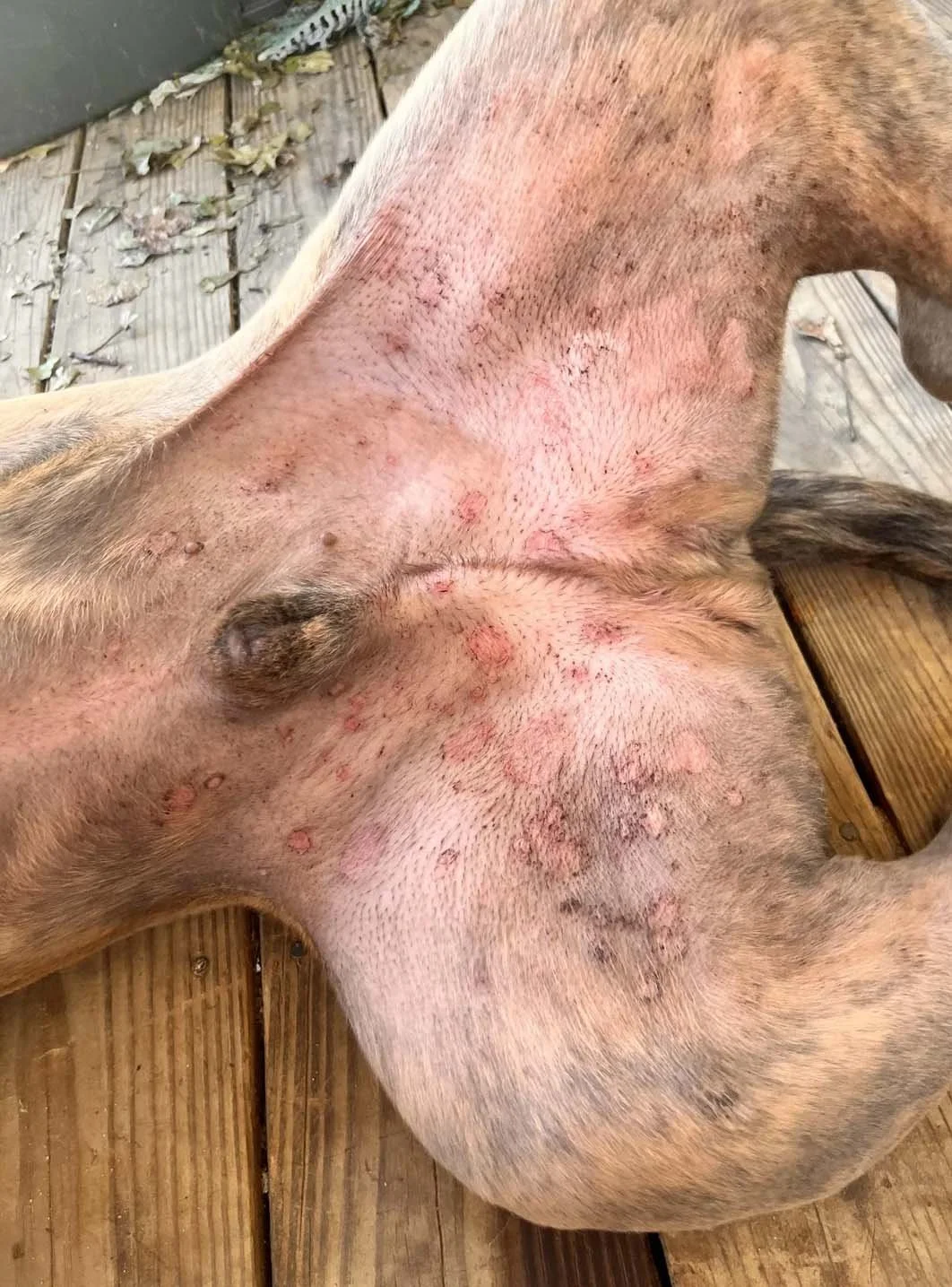
Allergies in Cane Corsos are immune-mediated hypersensitivity reactions to environmental allergens, food proteins, or contact irritants. The breed has a well-recognised predisposition to allergic skin disease, often presenting early in life and frequently becoming chronic and progressive if not properly managed.
Allergies are one of the most common underlying causes of secondary skin and ear disease in the Cane Corso.