canine elbow dysplasia
Elbow dysplasia is a collective term used to describe a group of developmental conditions affecting the elbow joint. These abnormalities develop during growth and can interfere with the normal formation and movement of the joint, leading to pain, lameness, and reduced function. While signs may appear in young dogs, the long-term impact is often progressive, with joint degeneration and arthritis developing over time. Early recognition, responsible breeding, and appropriate management are key factors in reducing severity and supporting long-term mobility.
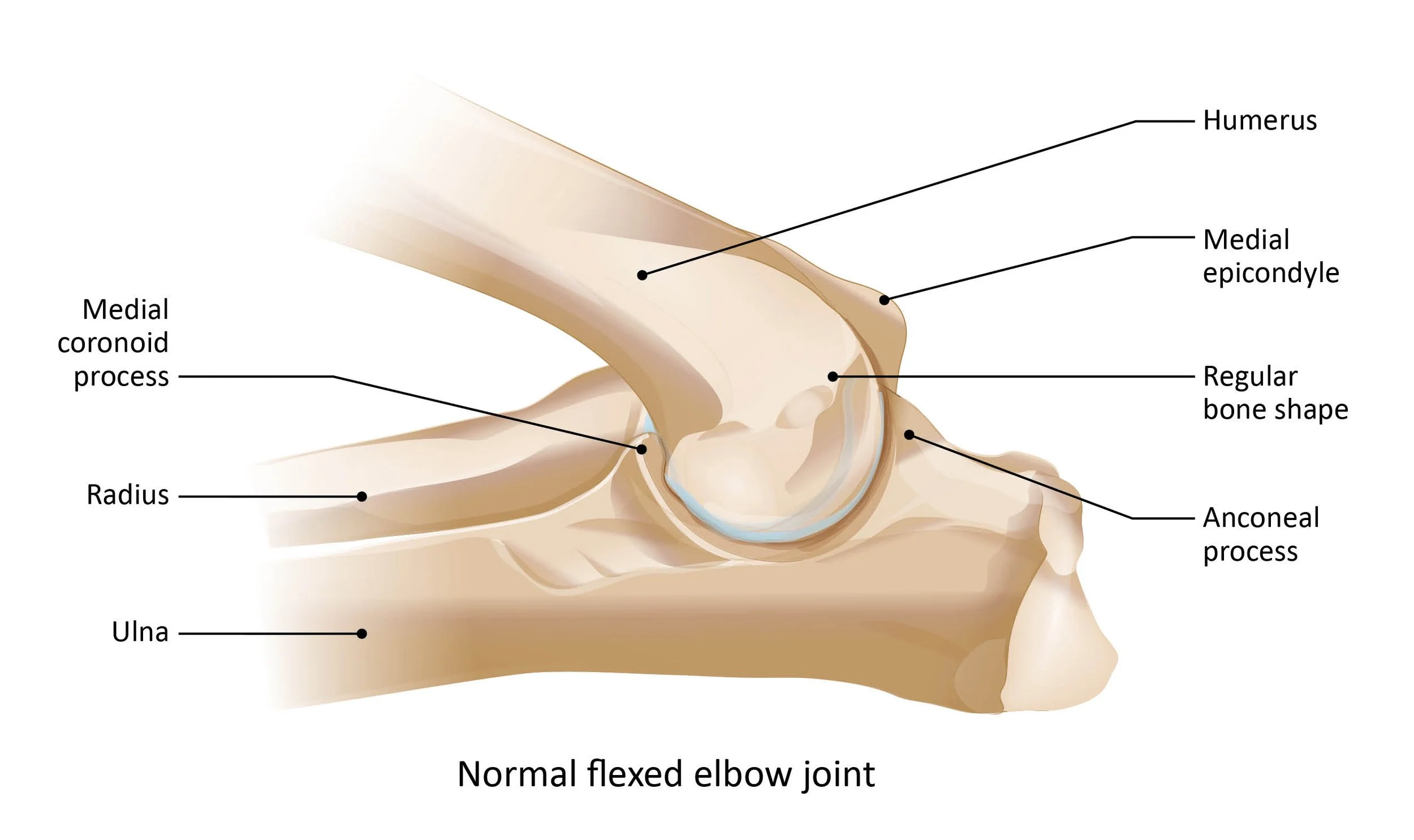
Normal elbow joint (flexed)
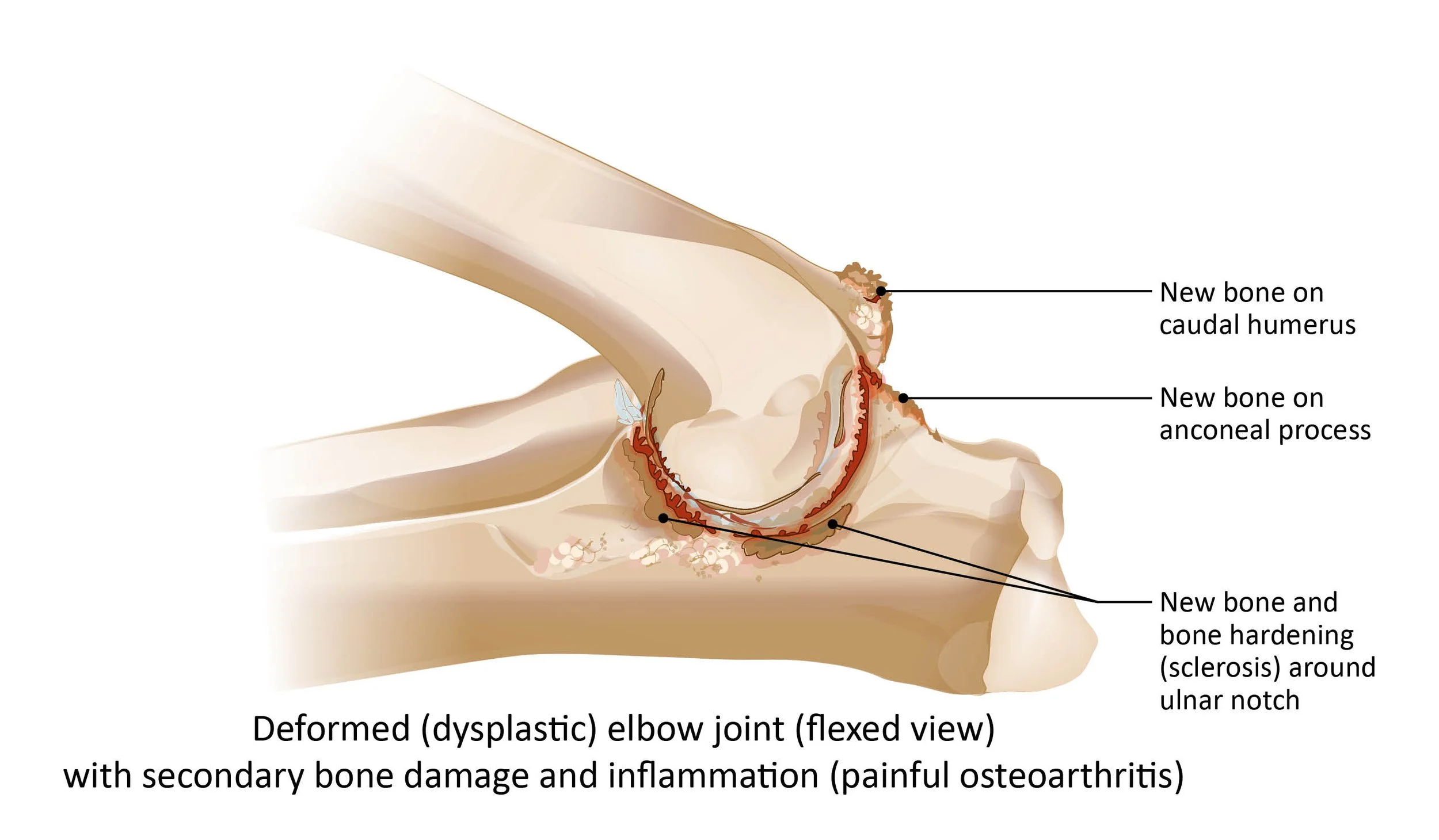
Dysplastic elbow joint (flexed)
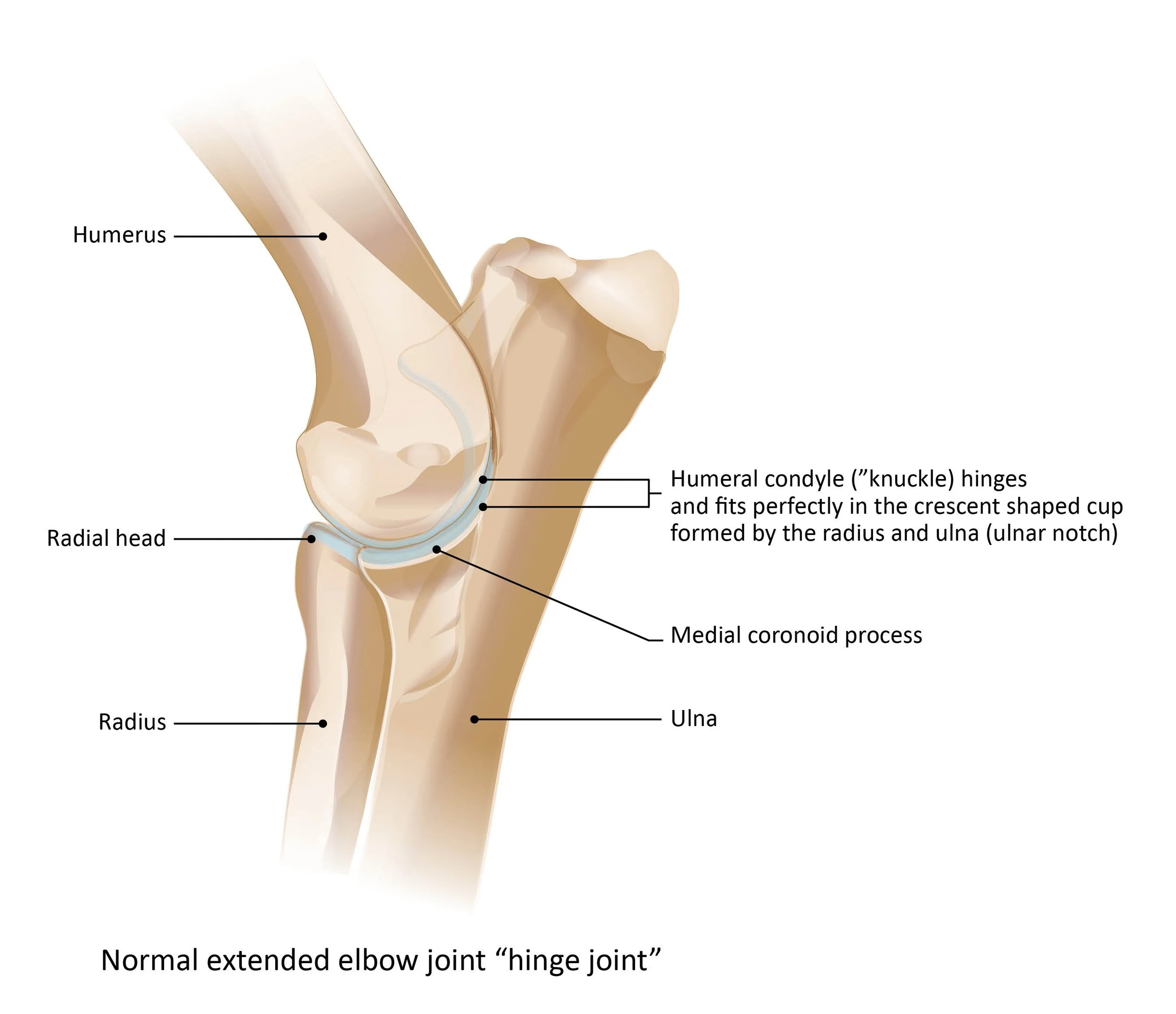
Normal elbow joint (extended)
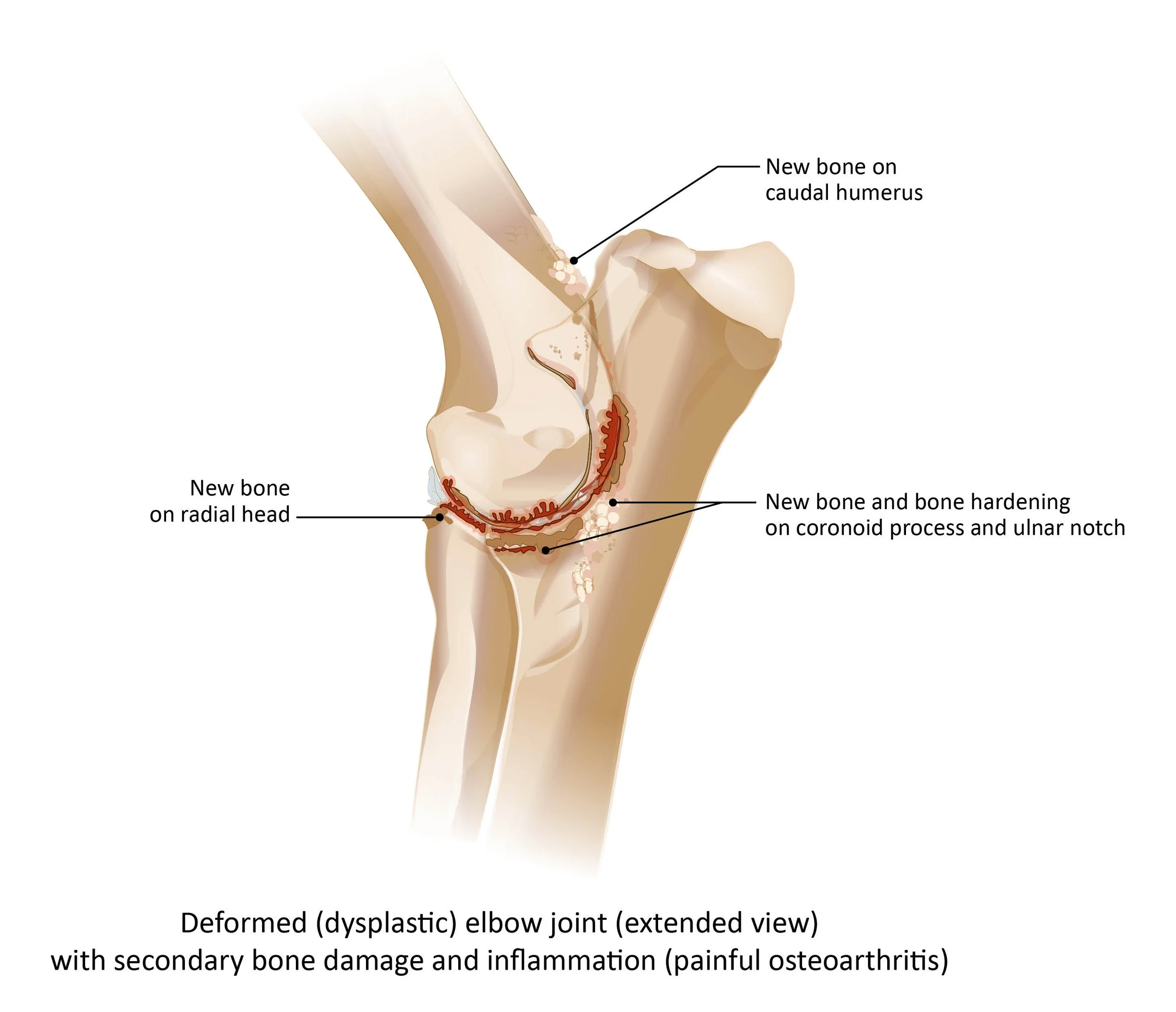
Dysplastic elbow joint (extended)
-
Description text goes hereSigns of elbow dysplasia in dogs vary between individuals and breeds. Some visible signs include:
Decreased range of motion
Limping
Unwilling to exercise
Unusual movement after rest or exercise
Groaning while resting or getting up
Signs of pain when moving the elbow
A vet's physical examination will provide a more reliable assessment and radiography is the only way of determining whether a dog has elbow dysplasia.
-
It is possible to ease some of the signs of pain and limitation of movement caused by elbow dysplasia. Treatment methods vary depending on the nature and severity of the problem. Non-surgical treatment can involve weight restriction and exercise control. Drugs may be used to relieve pain and inflammation. In some dogs, surgery and/or physiotherapy may be advised.
Talk to your vet if you notice any signs of elbow dysplasia.
-
Responsible breeding
Select breeding stock with good elbow scores and transparent health testing to reduce inherited risk within the population.Controlled growth
Feed an appropriate, balanced diet for large, slow-maturing breeds to avoid rapid growth and excessive weight gain.Weight management
Maintain a lean body condition throughout puppyhood and adulthood to minimise stress on developing and adult joints.Appropriate exercise
Provide regular, low-impact exercise and avoid repetitive jumping, hard surfaces, and excessive high-impact activity during growth.Early monitoring
Investigate any signs of stiffness, lameness, or altered gait promptly with veterinary assessment to allow early management.Long-term management mindset
Recognise that joint health is influenced by lifelong care, not just puppyhood, and adjust exercise and workload as the dog matures.