Hip Dysplasia
Canine hip dysplasia (CHD) is the most common, inherited problem seen in the Cane Corso. All breeds and especially large breeds can be affected by hip dysplasia. No puppy is born with hip dysplasia, it is a problem which develops after birth. Recent research suggests that hip dysplasia is increasingly linked to environmental issues with a much smaller percentage linked to genetics.
Looking back to the modern dog’s ancestor shows how critical it was to be able to move freely and rapidly in search of prey. If enough food could not be caught or stolen due to an inability to run, jump, twist and turn then starvation would be the only alternative. When food was provided by modern man, this need for excellence declined so if the dog was a little slower and maybe a little more stiff on one leg it didn’t matter so much. The dogs association with man for more than 10,000 years may appear to have been to mutual advantage but some debts wait to be paid; one of these debts concerns a condition called hip dysplasia.
Hip dysplasia is diagnosed using a combination of medical history, physical examination, and radiographic imaging. A diagnosis does not automatically mean a dog will be physically limited or require surgical intervention. Many dogs with hip dysplasia live full, active lives with little or no clinical impact when the condition is well managed.
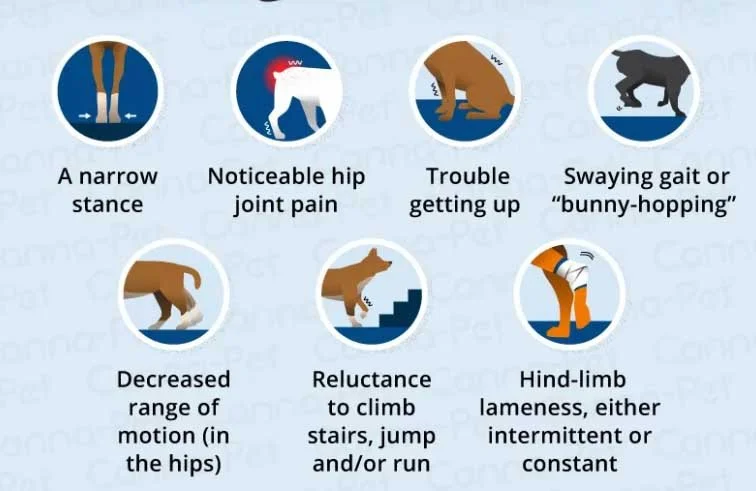
Hip dysplasia is often described as a bi-phasic condition, meaning clinical signs tend to appear at two distinct stages of life. The first phase commonly occurs during puppyhood or adolescence. Signs may include a “bunny-hopping” gait when running, reluctance to jump, stiffness, or difficulty rising from a seated position. Some young dogs appear to improve as they mature, although the underlying joint structure remains abnormal.
The second phase typically develops later in life, when degenerative changes and arthritis within the hip joint lead to chronic pain and reduced mobility. Clinical signs at this stage may mirror those seen earlier in life and can progress gradually over time. Early recognition, appropriate management, and long-term care play a significant role in maintaining comfort and quality of life.
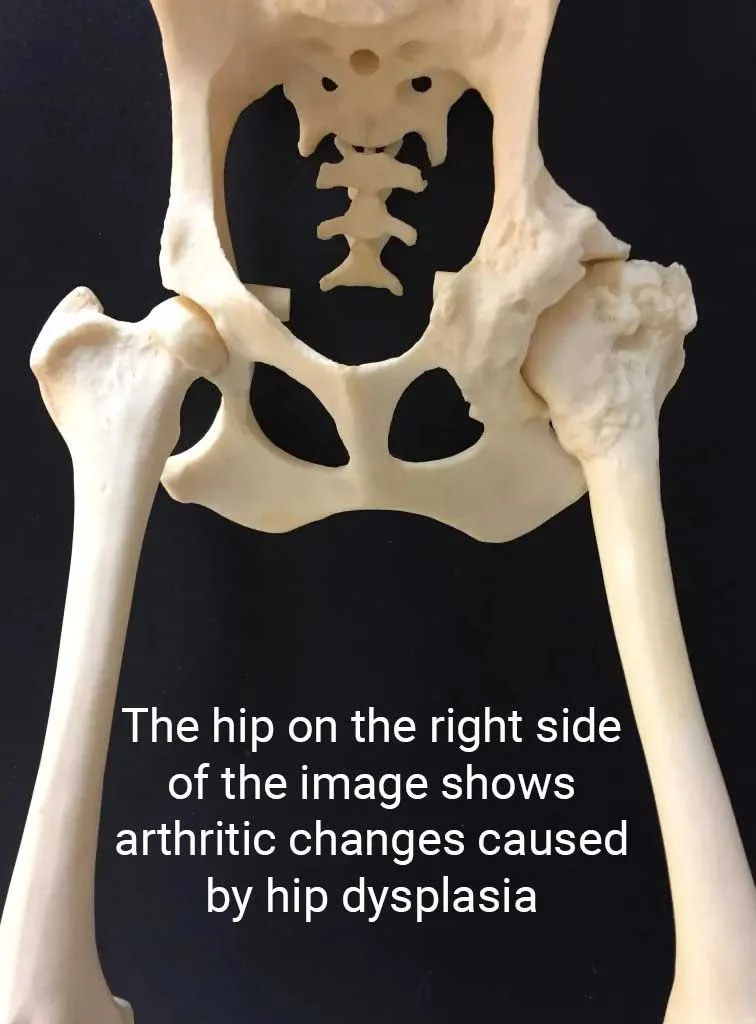
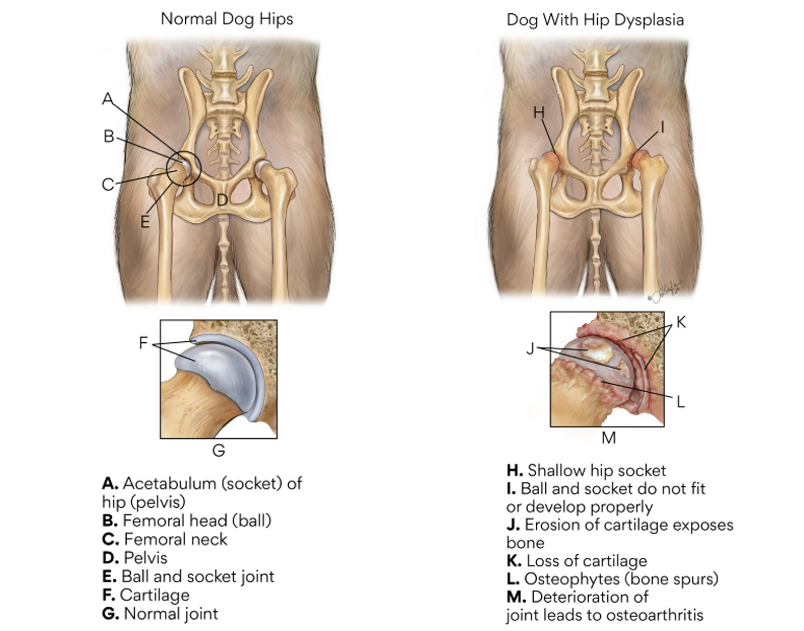
The discomfort associated with hip dysplasia occurs because instead of the head of the femur being seated solidly in the hip socket, there is excess motion – called laxity. Joint laxity causes painful stretching of the joint capsule and wearing of joint cartilage. If you read the lesson on Arthritis, you know that wearing of joint cartilage causes the inflammatory changes that we call arthritis
-
Choose breeders who screen their dogs for hip and elbow dysplasia through organizations like the British Veterinary Association (BVA) or the Orthopedic Foundation for Animals (OFA). Maintaining a healthy weight and avoiding excessive exercise during the puppy stage can also reduce the risk.
-
There are several treatment approaches available for dogs affected by hip dysplasia. The most appropriate option depends on the dog’s age, severity of symptoms, lifestyle, and overall health.
Surgical options may be considered in certain cases and include:
Pubic Symphysiodesis (PSP)
A preventative procedure performed in young puppies while significant growth remains. The growth plate between the two halves of the pelvis is fused, encouraging the hip sockets to develop greater coverage of the femoral head as the dog matures.Pelvic Osteotomy
A procedure carried out in growing dogs where sections of the pelvis are cut and repositioned to improve coverage of the femoral head and stabilise the joint.Femoral Head and Neck Ostectomy (FHO)
Involves removal of the femoral head to eliminate painful bone-on-bone contact. This procedure can be performed at any age, though it is most commonly used in adult dogs.Total Hip Replacement
The diseased joint is replaced with a prosthetic hip. This option is typically reserved for mature dogs once growth has finished and is usually performed by specialist surgeons.
-
Item descriptiSurgery is not always necessary. Many dogs with hip dysplasia can be managed successfully without surgical intervention, particularly when symptoms are mild to moderate and well controlled.
Non-surgical management may be appropriate for dogs whose mobility is not severely compromised and whose discomfort can be managed effectively.
Key areas of focus include:
Muscle development
Strong, well-conditioned muscles play a vital role in stabilising lax hip joints. Consistent, low-impact exercise such as controlled lead walking helps maintain muscle tone and joint function. Veterinary rehabilitation professionals can provide tailored exercise programmes to support healthy movement.Weight and nutrition
Maintaining a healthy body condition is essential. Excess weight increases stress on abnormal joints and can accelerate discomfort and degeneration. Balanced nutrition, appropriate portion control, and limiting high-calorie treats all contribute to long-term joint health.Pain management
Pain should never be dismissed as an inevitable part of ageing. Veterinary guidance can help manage discomfort through a combination of medications, supplements, and supportive therapies. Complementary treatments such as physiotherapy, acupuncture, laser therapy, or PEMF may also play a role for some dogs.Effective pain control supports mobility, preserves quality of life, and allows dogs to remain active and engaged.
Tip Top Hip Health
HD has been linked to a poor diet and increasingly environmental such as over exercise, damp bedding, allowing a young pup to keep jumping up etc. All potential buyers of Cane Corso puppies need to understand that through providing their pup with a proper diet, proper exercise and quality living conditions, they play an important role in helping their puppy grow into a healthy adult.