-
Symptoms
Unsteady or “wobbly” gait, particularly in the hind limbs
Weakness or dragging of the rear legs
Poor coordination or delayed limb placement
Difficulty rising, turning, or navigating uneven ground
Neck pain or stiffness in some cases
Progressive loss of strength or balance
Symptoms may worsen gradually and can vary in severity.
-
Treatment
Treatment depends on severity and individual presentation and may include:
Veterinary neurological assessment and imaging
Medical management to reduce inflammation and pain
Controlled exercise and activity modification
Physiotherapy and supportive mobility care
Surgical intervention in selected cases
Early diagnosis allows for more effective management and informed decision-making.
-
Prevention
Wobbler syndrome cannot always be prevented, but risk management includes:
Responsible breeding decisions
Monitoring neurological health within bloodlines
Avoiding excessive growth rates in young dogs
Early veterinary investigation of gait or coordination changes
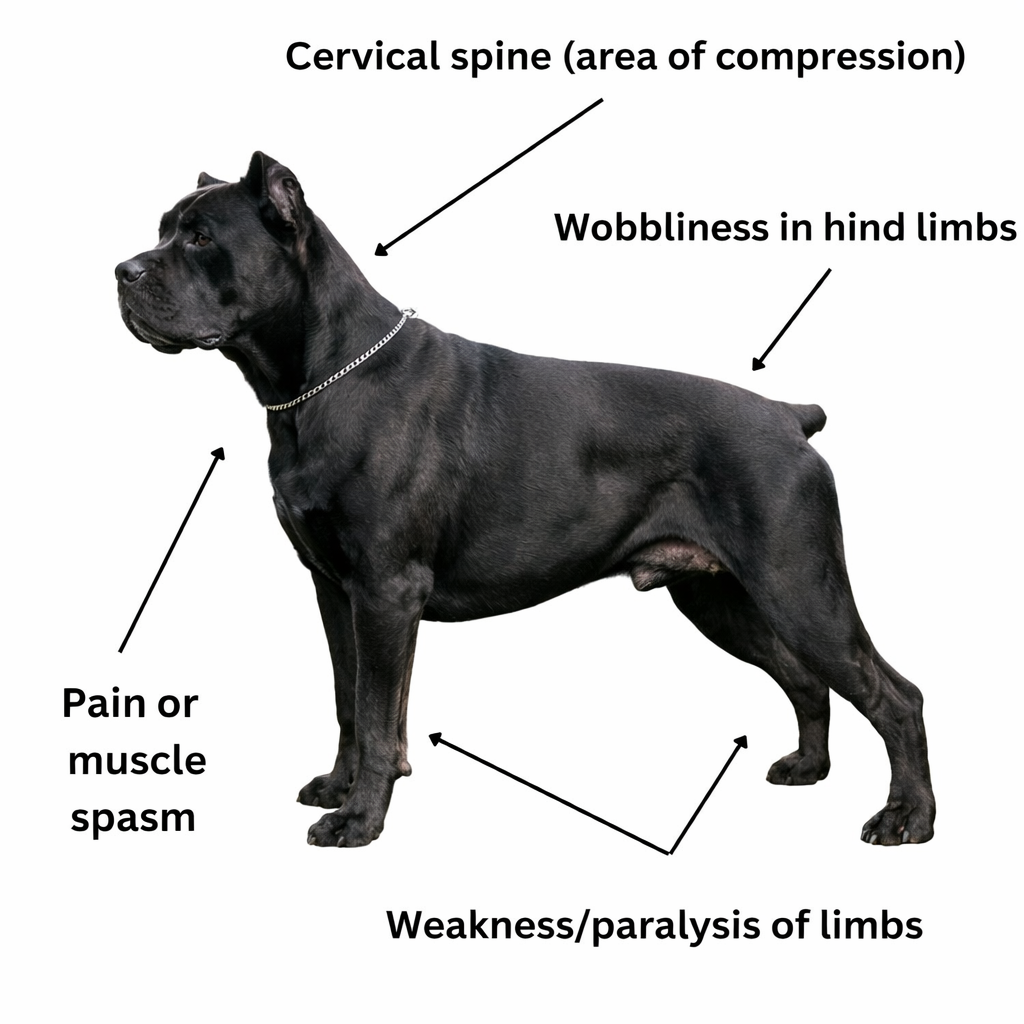
Wobbler Syndrome
(Cervical Spondylomyelopathy)
Wobbler syndrome is a neurological condition caused by compression of the spinal cord in the neck (cervical spine). This compression interferes with normal nerve signalling, leading to weakness, poor coordination, and an unsteady gait.
The condition is most commonly seen in large and giant breeds and may develop gradually or, in some cases, progress more rapidly. In powerful breeds such as the Cane Corso, early signs can be subtle and are often mistaken for clumsiness, stiffness, or normal ageing.